AFRICAN REGIONAL REGISTER – ARCMoW, 2024-2025 Session
1 – CABO VERDE: Documents on Slavery in the of the general Secretariat of the Government (Cabo Verde, 1842-1869)
The Archives of the General Secretariat of the Government (S.G.G.), whose manuscript books date from 1674 to 1954 and loose documents from 1803 to 1927, is one of the largest collections in the National Archives of Cabo Verde and the most sought-after by researchers. Among many other subjects, this collection contains a large amount of documentation on slavery in Cabo Verde, which has been used by national and international researchers to support their work on this phenomenon.
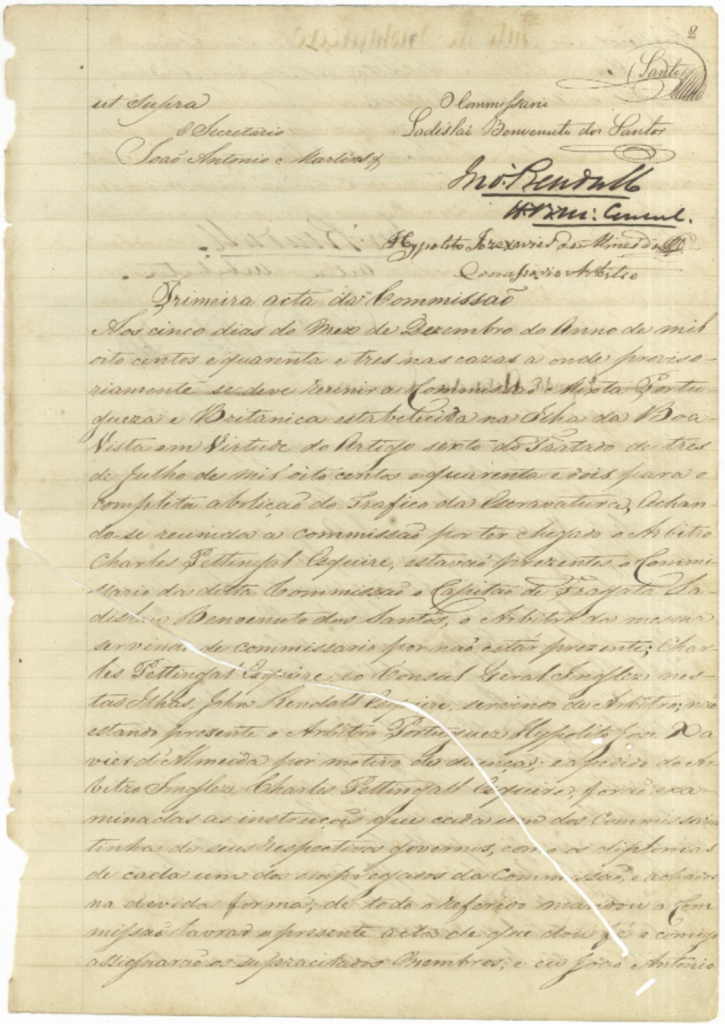
This documentation is important for preserving the memory of slavery, encouraging research on this phenomenon in its various aspects, with a focus on certain specifics, notably the Luso-British Joint Commission established on the island of Boa Vista in 1842, following the signing of a treaty between the Portuguese and British crowns regulating the abolition of the slave trade.
This collection consists of 4 boxes, 21 items, 702 sheets of loose documents, 1 handwritten book dated 1858 referring to the Letters of Liberty granted by the General Government of the Province of Cabo Verde, and 1 book of Oaths and installation records and minutes of the sessions of the Luso-British Joint Commission, dating from between 1843 and 1849.
The documents are physically organized (inventoryed) and digitized, accessible through two Simple Digital Repositories, one for the loose papers (boxes) and the other for the handwritten books.
Nominator : Institute of National Archives of Cabo Verde.
Address : Av. Dos Combatentes da Pátria- Chã-de-Areia- Cidade da Praia- Ilha de Santiago
Republic of Cabo Verde.
https://atom.arquivonacional.cv
2 – CABO VERDE: Census of slaves in Cabo Verde determined by Portuguese decree on 12/14/1854
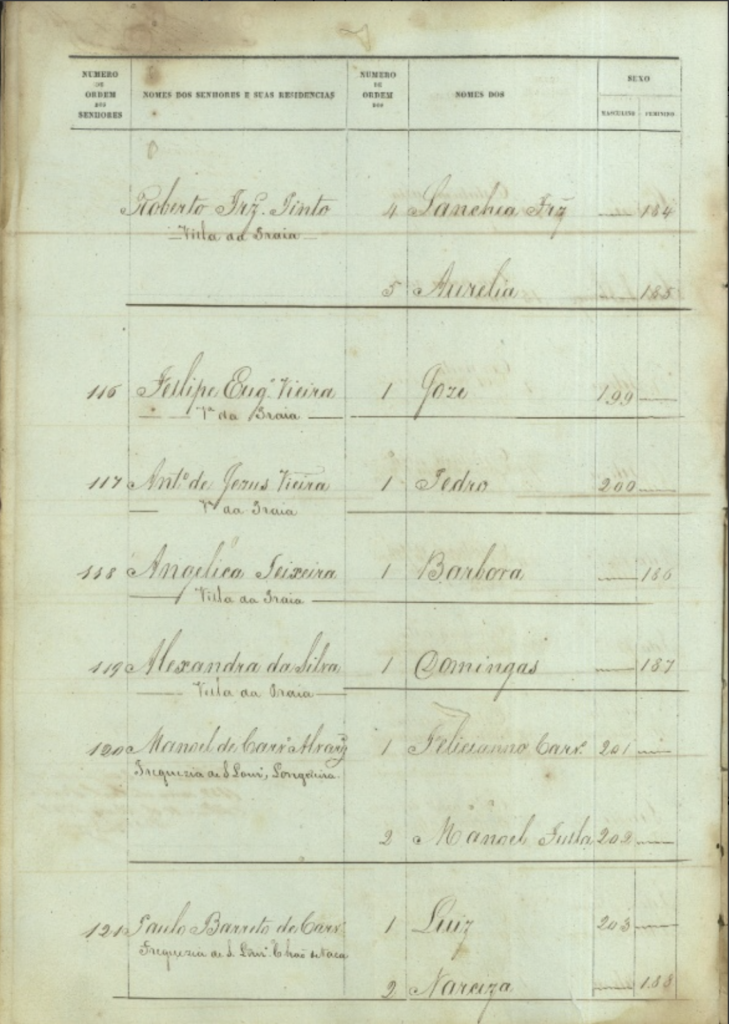
The documents comprise 11 slave registers compiled between 1856 and 1875, a time when slavery faced opposition worldwide and the United Kingdom was striving, through diplomatic and military means, to abolish it. The registers of slaves and freedmen stem from the Portuguese Crown Decree of December 14, 1854, which mandated the registration of all slaves and freedmen in its overseas possessions with local authorities within thirty days of its publication. This decree and the registers it established anticipated and prepared for the abolition of slavery in Portuguese possessions by the decree of February 25, 1869. The registers’ pages are organized into columns and require various pieces of information about the slaves (names, sex, place of birth, age, distinguishing marks, and occupations of slaves/freedmen) and their owners (names and addresses).
This provides a privileged view of the situation of slavery, both in each specific area and more generally in the region, as well as how Portugal sought to control the end of slavery. This is of considerable importance given that a large portion of the world’s enslaved African population was forcibly removed from ports located in this region.
Nominator : Institute of National Archives of Cabo Verde.
Address : Av. Dos Combatentes da Pátria- Chã-de-Areia- Cidade da Praia- Ilha de Santiago
Republic of Cabo Verde.